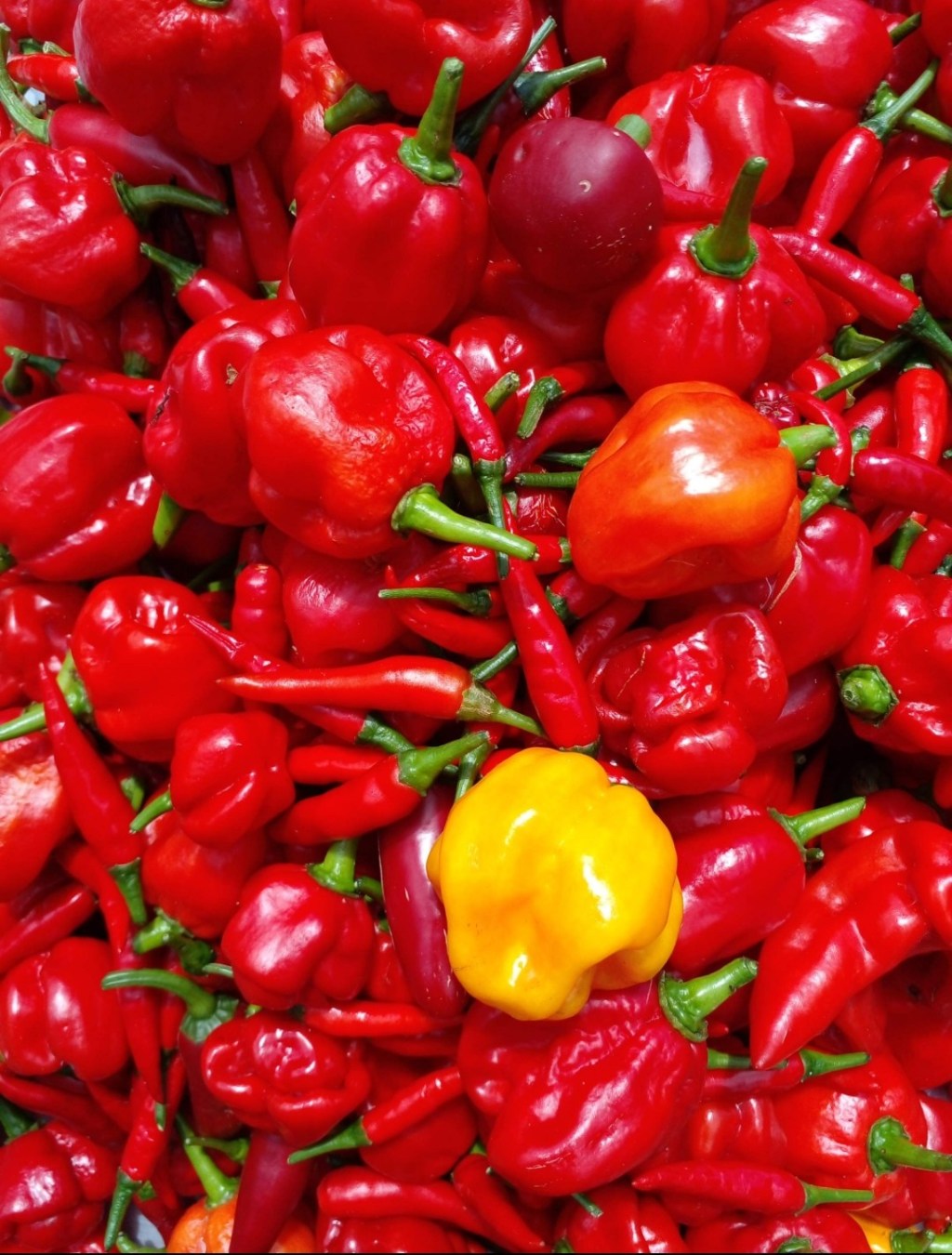
Hot stuff – Donna Summer
Donna Summer wasn’t talking about peppers (I’m pretty sure), but if you’ve ever bitten into a Scotch Bonnet or accidentally gone face-to-face with a Carolina Reaper, you know she could have been.
Because hot peppers aren’t just food, they’re adrenaline, culture, medicine, mischief, and memory all wrapped into a fiery little pod. They make you sweat, they make you cry, and if you’re lucky, they make you smile through the pain.
From the humble jalapeño that sneaks into taco night to the nuclear heat of a Reaper that laughs at your tolerance, peppers are the true rockstars of the produce aisle. And me? I didn’t just cook with them, I fell into their world, from pro kitchens to backyard gardens to nerdy fermentation experiments that sometimes ended in… well, let’s just say very “private” lessons in “what not to do.”
So, let’s talk fire: the flavors, the fails, the health boosts, the science, and the spicy community that made me fall head over heels for peppers.
My First Dance with Fire
When I first set foot in a professional kitchen, I was thrown into the deep end of the chili pool: cayenne, scotch bonnet, habanero, jalapeño, even the beastly Carolina Reaper. They were ingredients, sure, but also teachers. I learned how to coax their flavors into curries, marinades, chutneys, and sauces.
Back then, I was too busy soaking up every ounce of kitchen knowledge. The chefs, the flavors, the chaos, the rhythm of restaurant life. But later, when I had time to breathe, peppers came back to me. Not just as heat on a plate, but as living plants. That’s when another fire lit: growing my own food.
Because when you grow it yourself you really know what you’re putting on your plate.
Two Peas in a (Burning) Pod
Here’s the thing most people don’t realize: hot peppers aren’t just about “hot.” Each one carries a unique personality. Smoky, fruity, grassy, earthy, citrusy, there’s a whole spectrum under the burn.
This is where the Scoville scale comes in, the nerdy ruler of heat. Created by Wilbur Scoville in 1912, it measures the “spiciness” of peppers based on their capsaicin content (the compound that brings the burn). For reference:
- Bell pepper: 0 SHU (sweet and innocent)
- Jalapeño: 2,500–8,000 SHU (party starter)
- Habanero: 100,000–350,000 SHU (dance with caution)
- Carolina Reaper: up to 2.2 million SHU (say goodbye to your weekend plans)
My personal favorites? Chocolate, yellow, and red habaneros. Fruity, fiery, and perfect for sauces and homemade seasonings.
One of the things I love most about hot peppers: they’re universal. Every culture, every region, every grandma’s kitchen has their version of “the chili.” From Caribbean scotch bonnets in jerk chicken, to Mexican jalapeños in salsa, to Indian dried chilies in curries, hot peppers tell stories of place, people, and tradition.

From Fermentation to Fails (and Painful Lessons)
In recent years, I’ve nerded out hard in the pepper community: soil types, growing hacks, fermenting techniques, you name it. Fermentation especially fascinates me. It’s a whole alchemy: peppers, salt, time, and patience transforming into hot sauces, marmalades, chutneys, and spice blends.
But let’s talk fails. Because there were many.
The “funniest” (if you’re not me): I once fermented 5 kg of chocolate habaneros for an organic farm where I lived close by. Every day I opened the jars to let out CO₂. One morning, still half asleep, I noticed water on the counter, wiped it up, and carried on. Didn’t think much of it.
Fast forward a few minutes, post-bathroom break… and let’s just say my “private area” was on fire. Turns out that “water” was chili fermentation liquid. No milk in the house. No mercy from the chili gods. Pure. Burning. Lesson. Learned. (Hot tip! Yes, pun intended. Never ever rub your eyes or, well, anywhere sensitive after handling chilies.)
Hot Peppers & Health (The Science-y Bit)
Peppers aren’t just thrill-seekers. They’re actually pretty amazing for your health:
- Rich in vitamins A, C, and E → immune support + skin health
- Antioxidants → protect cells and reduce inflammation
- Capsaicin → may:
- Relieve pain (arthritis, migraines)
- Boost metabolism & aid weight management
- Support heart health & circulation
- Reduce risk of certain cancers (early research but promising)
- Clear nasal congestion (goodbye sniffles)
- Even help you live longer (studies show chili eaters may have lower mortality risk)
But moderation is key. Too much capsaicin = stomach rebellion.
The Community Fire
Here’s what surprised me most: the pepper community itself. From backyard growers to professional sauce makers, it’s one of the most generous, passionate groups I’ve ever met. Everyone’s got their own method, their own flavors, their own stories but the vibe is always about sharing, helping, and celebrating the burn together.
I’ve spoken with pepper growers across continents, each with unique struggles, triumphs, and dishes, yet united by a simple love for growing and eating spicy food. That connection across cultures? That’s food at its best.
Wrapping Up: Passion with Heat
Hot peppers are more than just a dare on a plate. They’re tradition, science, connection, and a whole lot of personality wrapped up in one tiny pod.
So next time you add that fiery kick, remember: you’re not just spicing up your food, you’re joining a global, fiery family.
Your turn: What’s the hottest pepper you’ve tried? Any kitchen wins… or burns you’ll never forget? Drop your stories below, let’s trade some spice scars.
Stay fiery,
Yohan
 Twist of Yohan
Leave a comment